

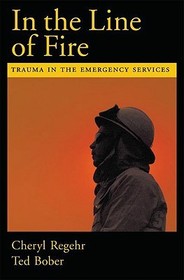
In the Line of Fire
Trauma in the Emergency Services
- Publisher's listprice GBP 56.00
-
26 754 Ft (25 480 Ft + 5% VAT)
The price is estimated because at the time of ordering we do not know what conversion rates will apply to HUF / product currency when the book arrives. In case HUF is weaker, the price increases slightly, in case HUF is stronger, the price goes lower slightly.
- Discount 10% (cc. 2 675 Ft off)
- Discounted price 24 079 Ft (22 932 Ft + 5% VAT)
Subcribe now and take benefit of a favourable price.
Subscribe
26 754 Ft

Availability
printed on demand
Why don't you give exact delivery time?
Delivery time is estimated on our previous experiences. We give estimations only, because we order from outside Hungary, and the delivery time mainly depends on how quickly the publisher supplies the book. Faster or slower deliveries both happen, but we do our best to supply as quickly as possible.
Product details:
- Publisher OUP USA
- Date of Publication 20 January 2005
- ISBN 9780195165029
- Binding Hardback
- No. of pages288 pages
- Size 160x236x20 mm
- Weight 547 g
- Language English
- Illustrations numerous line drawings 0
Categories
Short description:
This much-needed new work, based on original research and clinical experience, describes the consequences of trauma exposure on emergency responders and the personal, organizational and societal factors that can ameliorate or exacerbate traumatic response. The authors outline specific intervention strategies, spanning prevention, disaster response, and follow-up, on individual, family, group, organizational and community levels.
MoreLong description:
In the wake of disaster emergency responders are first on the scene and last to leave. They put concern for the lives of others over concern for their own lives, and work tirelessly to recover the bodies of the missing. Their heroic actions save lives, provide comfort and care for the wounded and inspire onlookers, but at what cost to themselves? We now know that rescue workers who are exposed to mutilated bodies, mass destruction, multiple casualties, and life-threatening situations may become the hidden victims of disaster. The traumatic consequences of exposure can profoundly impact emergency responders, radiate to their families, and permeate the emergency organization.
This book, based on the authors' original research and clinical experience, describes the consequences of trauma exposure on police officers, fire fighters, and paramedics. Weaving data collected in large-scale quantitative studies with the personal stories of responders shared in qualitative interviews, this much-needed account explores the personal, organizational, and societal factors that can ameliorate or exacerbate traumatic response.
Stress theory, organizational theory, crisis theory, and trauma theory provide a framework for understanding trauma responses and guiding intervention strategies. Using an ecological perspective, the authors explore interventions spanning prevention, disaster response, and follow-up, on individual, family, group, organizational, and community levels. They provide specific suggestions for planning intervention programmes, developing trauma response teams, training emergency service responders and mental health professionals, and evaluating the effectiveness of services provided.
Disaster, whether large-scale or small, underscores our ongoing vulnerability and the crucial need for response plans that address the health and well being of those who confront disaster on a daily basis. In the Line of Fire speaks directly to these emergency response workers as well as to the mental health professionals who provide them with services, the administrators who support their effort, and the family members who wonder if their loved one will return home safely from work tonight.
A hint at the wisdom and readability of this ambitious book can be found on its opening pages, in which the authors dedicate their work "to those important individuals in our lives who have taught us about resilience, grace and gratitude". Using research culled from interviews with hundreds of police officers, paramedics, firefighters, and emergency mental health practitioners. In The Line of Fire presents a sober look at the work emergency responders do and the trauma-inducing situations they face. What sets this book apart from others I've seen on the subject is its understanding of the contextual nature of trauma.
Table of Contents:
Setting the stage
All in a day's work: traumatic events in the line of duty
Building a framework: health, stress, crisis and trauma
Disastrous events: mass emergencies and the emergency responder
The right stuff: trauma and coping
Help or hindrance?: stress and the emergency service organization
Heroes or villains?: public inquiries
Are you coming home tonight?: the impact of emergency service work on families
The continuum of interventions I: doing the right job at the right time
The continuum of interventions II: extreme stress interventions
Laying the foundation: developing trauma response teams
Keeping it going: team maintenance
Does it work?: evaluating the efficacy of interventions

