

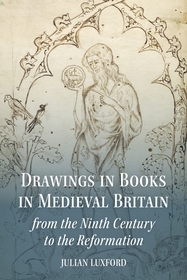
Drawings in Books in Medieval Britain from the Ninth Century to the Reformation
Series: Boydell Studies in Medieval Art and Architecture; 30;
- Publisher's listprice GBP 160.00
-
72 240 Ft (68 800 Ft + 5% VAT)
The price is estimated because at the time of ordering we do not know what conversion rates will apply to HUF / product currency when the book arrives. In case HUF is weaker, the price increases slightly, in case HUF is stronger, the price goes lower slightly.
- Discount 20% (cc. 14 448 Ft off)
- Discounted price 57 792 Ft (55 040 Ft + 5% VAT)
- Discount is valid until: 30 June 2026
Subcribe now and take benefit of a favourable price.
Subscribe
72 240 Ft

Availability
Estimated delivery time: In stock at the publisher, but not at Prospero's office. Delivery time approx. 3-5 weeks.
Not in stock at Prospero.
Why don't you give exact delivery time?
Delivery time is estimated on our previous experiences. We give estimations only, because we order from outside Hungary, and the delivery time mainly depends on how quickly the publisher supplies the book. Faster or slower deliveries both happen, but we do our best to supply as quickly as possible.
Product details:
- Publisher Boydell & Brewer Ltd
- Date of Publication 31 March 2026
- ISBN 9781837653430
- Binding Hardback
- No. of pages552 pages
- Size 234x156 mm
- Weight 1656 g
- Language English
- Illustrations 17 colour and 175 b/w illus. 692
Categories
Short description:
The first broad and long study of a major aspect of British medieval art, examining the historical relationships between medieval drawings and books.
MoreLong description:
The first broad and long study of a major aspect of British medieval art, examining the historical relationships between medieval drawings and books. The art of drawing and its products had a determining relationship to the visual arts of the Middle Ages. They also had other purposes, which if understood, help one to grasp the broader availability and usefulness of the medium. This groundbreaking study deals particularly with the historical relationships between medieval drawings and books. Using a wide range of material and documentary evidence, it explains how book-bound drawings may be defined, classified, and understood in relation to their physical settings and the ends they were made to serve. In orientation, the study is primarily art historical: most of its arguments emerge from curiosity about the psychology and experience of making drawn images. As such, it tackles a surprisingly neglected field. Because it deals with a pervasive aspect of book-design, it also makes a basic contribution to medieval codicology. There are six substantial chapters, the first two dealing with the definition of drawings, existing scholarly approaches to them, and issues of artistic status and agency. These lay the groundwork for the rest of the study, which analyses the placement of drawings at the fronts and backs of books (chapters 3, 4), and drawings embedded in the bodies of manuscripts that were mainly devoted to text (chapters 5, 6). Drawing emerges as an accessible, flexible medium of expression to rank with writing.
MoreTable of Contents:
Introduction 1: Definition and Classification of Medieval Drawings 2: The Activity of Drawing in Medieval Britain: Taste, Motives, and Agency 3. Collateral Drawings, Part I: Collateral Leaves and Serial Drawings 4: Collateral Drawings, Part II: Individual Drawings and Their Contexts 5: Embedded Drawings, Part I: The Relationship of Drawings to Page Design and Text 6: Embedded Drawings, Part II: Integral and Added Drawings Bibliography Manuscripts Cited General Index
More
