

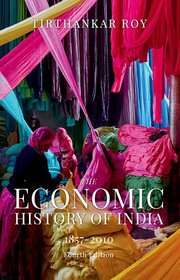
The Economic History of India, 1857-2010
-
10% KEDVEZMÉNY?
- A kedvezmény csak az 'Értesítés a kedvenc témákról' hírlevelünk címzettjeinek rendeléseire érvényes.
- Kiadói listaár GBP 31.99
-
14 443 Ft (13 755 Ft + 5% áfa)
Az ár azért becsült, mert a rendelés pillanatában nem lehet pontosan tudni, hogy a beérkezéskor milyen lesz a forint árfolyama az adott termék eredeti devizájához képest. Ha a forint romlana, kissé többet, ha javulna, kissé kevesebbet kell majd fizetnie.
- Kedvezmény(ek) 10% (cc. 1 444 Ft off)
- Kedvezményes ár 12 998 Ft (12 380 Ft + 5% áfa)
Iratkozzon fel most és részesüljön kedvezőbb árainkból!
Feliratkozom
14 443 Ft

Beszerezhetőség
Csak rendelésre kapható a kiadónál, kissé időigényes.
Why don't you give exact delivery time?
A beszerzés időigényét az eddigi tapasztalatokra alapozva adjuk meg. Azért becsült, mert a terméket külföldről hozzuk be, így a kiadó kiszolgálásának pillanatnyi gyorsaságától is függ. A megadottnál gyorsabb és lassabb szállítás is elképzelhető, de mindent megteszünk, hogy Ön a lehető leghamarabb jusson hozzá a termékhez.
A termék adatai:
- Kiadás sorszáma 4
- Kiadó OUP India
- Megjelenés dátuma 2020. október 20.
- Kötetek száma Paperback
- ISBN 9780190128296
- Kötéstípus Puhakötés
- Terjedelem400 oldal
- Méret 216x141x28 mm
- Súly 376 g
- Nyelv angol 47
Kategóriák
Rövid leírás:
From the end of the eighteenth century, two distinct global processes began to transform livelihoods and living conditions in the South Asia region. These were the rise of British colonial rule and globalization, that is, the integration of the region in the emerging world markets for goods, capital, and labour services. Two hundred years later, India was the home to many of the world's poorest people as well as one of the fastest growing market economies in the world. Does a study of the past help to explain the paradox of growth amidst poverty? The Economic History of India: 1857-2010 claims that the roots of this paradox go back to India's colonial past, when internal factors like geography and external forces like globalization and imperial rule created prosperity in some areas and poverty in others.
TöbbHosszú leírás:
From the end of the eighteenth century, two distinct global processes began to transform livelihoods and living conditions in the South Asia region. These were the rise of British colonial rule and globalization, that is, the integration of the region in the emerging world markets for goods, capital, and labour services. Two hundred years later, India was the home to many of the world's poorest people as well as one of the fastest growing market economies in the world. Does a study of the past help to explain the paradox of growth amidst poverty? The Economic History of India: 1857-2010 claims that the roots of this paradox go back to India's colonial past, when internal factors like geography and external forces like globalization and imperial rule created prosperity in some areas and poverty in others.
Looking at the recent scholarship in this area, this revised edition covers new subjects like environment and princely states. The author sets out the key questions that a study of long-run economic change in India should begin with and shows how historians have answered these questions and where the gaps remain.
Tartalomjegyzék:
List of Tables
List of Figures
List of Maps
List of Abbreviations
1. INTRODUCTION
2. TRANSITION TO COLONIALISM: 1707-1857
3. THE PATTERN OF ECONOMIC GROWTH: 1857-1947
4. AGRICULTURE
5. SMALL-SCALE INDUSTRY
6. LARGE-SCALE INDUSTRY
7. PLANTATIONS, MINES, BANKING
8. INFRASTRUCTURE
9. HOW THE GOVERNMENT WORKED
10. POPULATION
11. THE ECONOMY AND THE ENVIRONMENT
12. THE PRINCELY STATES
13. ECONOMIC CHANGE IN INDIA 1950-2010
14. CONCLUSION
SELECTED SOURCES
GLOSSARY OF INDIAN TERMS
INDEX
About the Author

