

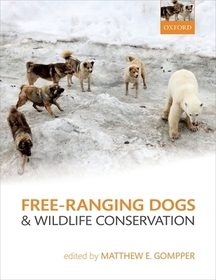
Free-Ranging Dogs and Wildlife Conservation
-
10% KEDVEZMÉNY?
- A kedvezmény csak az 'Értesítés a kedvenc témákról' hírlevelünk címzettjeinek rendeléseire érvényes.
- Kiadói listaár GBP 63.00
-
28 444 Ft (27 090 Ft + 5% áfa)
Az ár azért becsült, mert a rendelés pillanatában nem lehet pontosan tudni, hogy a beérkezéskor milyen lesz a forint árfolyama az adott termék eredeti devizájához képest. Ha a forint romlana, kissé többet, ha javulna, kissé kevesebbet kell majd fizetnie.
- Kedvezmény(ek) 10% (cc. 2 844 Ft off)
- Kedvezményes ár 25 600 Ft (24 381 Ft + 5% áfa)
Iratkozzon fel most és részesüljön kedvezőbb árainkból!
Feliratkozom
28 444 Ft

Beszerezhetőség
Megrendelésre a kiadó utánnyomja a könyvet. Rendelhető, de a szokásosnál kicsit lassabban érkezik meg.
Why don't you give exact delivery time?
A beszerzés időigényét az eddigi tapasztalatokra alapozva adjuk meg. Azért becsült, mert a terméket külföldről hozzuk be, így a kiadó kiszolgálásának pillanatnyi gyorsaságától is függ. A megadottnál gyorsabb és lassabb szállítás is elképzelhető, de mindent megteszünk, hogy Ön a lehető leghamarabb jusson hozzá a termékhez.
A termék adatai:
- Kiadó OUP Oxford
- Megjelenés dátuma 2013. október 17.
- ISBN 9780199663217
- Kötéstípus Keménykötés
- Terjedelem330 oldal
- Méret 248x195x22 mm
- Súly 914 g
- Nyelv angol 0
Kategóriák
Rövid leírás:
This edited volume adopts a global perspective to review how dogs interact with wildlife, how humans perceive these interactions, the potential importance of dog-wildlife interactions, and the scope of the problems.
TöbbHosszú leírás:
Dogs are the world's most common and widespread carnivores and are nearly ubiquitous across the globe. The vast majority of these dogs, whether owned or un-owned, pure-bred or stray, spend a large portion of their life as unconfined, free-roaming animals, persisting at the interface of human and wildlife communities. Their numbers are particularly large throughout the developing world, where veterinary care and population control are often minimal and human populations are burgeoning.
This volume brings together the world's experts to provide a comprehensive, unifying, and accessible review of the effects of dogs on native wildlife species. With an emphasis on addressing how free-ranging dogs may influence wildlife management and native species of conservation concern, chapters address themes such as the global history and size of dog populations, dogs as predators, competitors, and prey of wildlife, the use of dogs as hunting companions, the role of dogs in maintaining diseases of wildlife, and the potential for dogs to hybridize with wild canid species. In addition, the potential role of dogs as mediators of conservation conflict is assessed, including the role of dogs as livestock guardians, the potential for dogs to aid researchers in locating rare wildlife species of conservation interest, and the importance of recognizing that some populations of dogs such as dingoes have a long history of genetic isolation and are themselves important conservation concerns. A common theme woven throughout this volume is the potential for dogs to mediate how humans interact with wildlife and the recognition that the success of wildlife conservation and management efforts are often underpinned by understanding and addressing the potential roles of free-ranging dogs in diverse natural ecosystems.
Free-Ranging Dogs and Wildlife Conservation is aimed at professional wildlife and conservation ecologists, managers, graduate students, and researchers with an interest in human-dog-wildlife interactions. It will also be of relevance and use to dog welfare researchers, veterinary scientists, disease ecologists, and readers with an interest in the interface of domestic animals and wildlife.
The amount of information contained in this book is staggering, as are the references accompanying each chapter. I know I shall be constantly pulling it off my shelf to revisit the wealth of data summarized by the authors. I learned a lot from reading it and can see it being adopted in advanced undergraduate and graduate courses in areas such as conservation biolody, conservation behavior, behavior ecology and animal behavior.
Tartalomjegyzék:
Foreword
Introduction: Outlining the Ecological Influences of a Subsidized, Domesticated Predator
The Dog-Human-Wildlife Interface: Assessing the Scope of the Problem
Dogs as Predators and Trophic Regulators
Top-dogs and Under-dogs: Competition between Dogs and Sympatric Carnivores
Dogs as Agents of Disturbance
Dog Eat Dog, Cat Eat Dog: Social-ecological Dimensions and Implications of Dog Predation by Wild Carnivores
Dogs, Disease, and Wildlife
Impact of Hybridization with Domestic Dogs on the Conservation of Wild Canids
Dog Conservation and the Population Genetic Structure of Dogs
Dogs as Mediators of Conservation Conflicts
The Current and Future Roles of Free-ranging Detection Dogs in Conservation Efforts
Hunting Dogs and the Extraction of Wildlife as a Resource
The Human Dimensions of Dog-Wildlife Interactions

